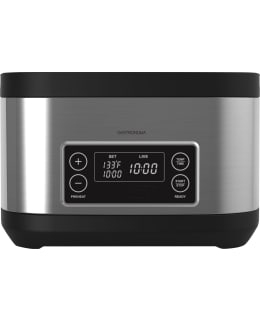
Sous vide has long been the cooking method of choice for professional chefs.
"Sous vide" is French for "in a vacuum". It describes a cooking method in which food is placed in sealed vacuum bags and cooked in a water bath. The food is cooked at a constant low temperature for a long period of time to make it moist and tasty. When the vacuum bag is closed, the food cooks in its own juices, together with any marinades or seasonings you have added. The vitamins, minerals and juices are preserved and the food tastes better. It makes food healthier, juicier and tastier. Because sous vide cooked meat is more tender, it is possible to use cheaper cuts such as neck fillet, shin bone and shoulder, which are often tastier than more expensive cuts.
While sous vide cooking requires that foods are vacuum-packed one at a time, several products can be cooked simultaneously as long as they are cooked at the same temperature.
It is difficult to overcook food in sous vide cooking, but the texture of the food may change slightly during cooking. Food can be prepared well in advance of serving, so sous vide is ideal when you have guests over.
Meat is particularly well suited to sous vide cooking as it is softer, juicier and tastier, but vegetables and fish can also be cooked in this way.
We recommend sous vide cooking for the following foods:
- Beef, veal, lamb, pork and game.
- Chicken, turkey and duck
- Lean and fatty fish, lobster tails and scallops.
- Root vegetables such as potatoes, carrots, parsnips, beets and turnips.
- Crunchy vegetables such as peas, asparagus, corn, broccoli, cauliflower, eggplant, onions and squash.
- Hard fruits such as apples and pears.
- Soft fruits such as mango, plums, apricots, peaches, nectarines, papayas and strawberries.
You can marinate food or add spices, herbs, butter or oil before closing the vacuum bag.
Food must be sealed in the vacuum bag to remove air and moisture. This ensures that the food retains its natural flavour and nutritional content. The vacuum also helps to open the pores of meat, poultry, fish and seafood, allowing the marinade and seasonings to be better absorbed and the food to taste better.
Oxygen and moisture in the ambient air degrade the taste, nutrition and texture of food, and therefore it is important to use a good quality vacuum packer to remove air and moisture before sealing the bag to ensure that the food is optimally vacuum packed.
Once the water in the kettle has reached the required temperature, vacuum bags containing food should be carefully placed in the water. Ensure that the bags are completely submerged and that water can circulate around the bags to ensure even cooking.
When cooking foods using the sous vide method, it may be necessary to brown the meat in a frying pan or on a grill to improve its appearance and flavour. Remove the food from the bag and brown it quickly on a very hot frying pan or grill rack. This will caramelize the fat and proteins and improve the flavor.