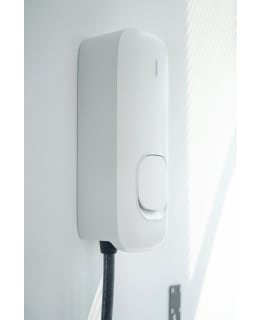
A compact charging station with top-of-the-range features and a Type 2 socket. The CC30 11kW charger is the ideal choice for customers looking for a compact and stylish charging station. Smart charging: The charging process can be monitored and controlled via the EVSEMaster smartphone app (available to download free of charge for iOS and Android). User-friendly EV charger: Easy to install as a fixed wall-mounted unit (electrical installations must be carried out by a qualified electrician). It has sufficient power to fully charge a car overnight. With an IP66 rating, the charger can be used worry-free even in inclement weather.
Features:- Three-phase charging power 3.7–11 kW (3x6 A–3x16 A)
- Single-phase charging power 1.3–3.7 kW (6–16 A)
- Type 2 port for charging cable
- 1-metre three-phase cable
- Smart LED indicator shows charging status
- Smart charging power control via a mobile app
- Versatile and easy-to-use app for smartphones
- Type A AC residual current protection + 6 mA DC residual current protection
- Protection against leakage, overvoltage, undervoltage, overheating and lightning strikes
- Material: ABS + PC plastic casing
- Power consumption in standby mode: less than 3 W
- Charging station: IP66
- CE-approved
- Colour: White
- Dimensions (H x W x D): 330 x 120 x 100 mm
- Weight: 3.5 kg
- Warranty: 24 months
- Operating temperature: -25 °C to +55 °C
Package contents:- charging station
- user manual
Please note! The new ISO 15118-20 standard comes into force in the EU on 11 January 2027, and from that date onwards, the installation of permanently fitted electric vehicle chargers will be prohibited if the device does not have a smart data communication interface compliant with ISO 15118-20. The new standard does not introduce any changes to regulations relating to product safety.
What is the ISO 15118-20 standard?
- A common language: The standard defines the method by which a vehicle and a charger exchange data via an IP-based network
- Two-way charging (V2G): Enables energy to be fed back from the car’s battery to the electricity grid or a property (Vehicle-to-Grid and V2H)
- Plug & Charge: The car automatically identifies itself to the charger without the need for separate RFID cards or apps